Objective
This procedure establishes the safe practices that must be employed when working with radioactive materials on campus.
Scope
This procedure has been developed and implemented by UTHSC Research Safety Affairs and approved by the UTHSC Radiation Safety Committee. This procedure applies to all UTHSC employees, students, and campus visitors that work with radioactive materials or work in a laboratory authorized to use radioactive materials.
Roles
Radiation Safety Officer (RSO) – will monitor compliance with safe lab practices when conducting laboratory audits.
Principal investigator/Authorized User – will ensure all persons with access to authorized radioactive materials labs are trained on and comply with the requirements of this procedure.
Definitions
Procedure
- The following safety requirements must be followed by laboratories authorized to use unsealed source of radioactive materials.
- Eating, drinking, chewing gum, use of tobacco products, vaping, or the application of cosmetics is prohibited in a laboratory authorized to use or store radioactive materials, radioactive waste, or radioactive contaminated equipment
- The following PPE is required when handling radioactive materials, radioactive waste, and radioactive contaminated equipment:
- Appropriate disposable gloves
- Lab coat
- Long pants or trousers that cover the legs
- Closed toe shoes
- Protective eyewear as required
- Radiation dosimetry if assigned
- Work surfaces where radioactive materials are used must be clearly identified.
- Never pipette by mouth.
- Cover radiation work areas with absorbent paper with impervious backing.
- Use impervious floor mats in radiation work areas to protect the floor from radioactive contamination.
- Review and comply with RSP12 Transport of Radioactive Material on Campus when moving radioactive material outside the laboratory.
- Ensure all radioactive materials are stored properly and securely when not in use by authorized radiation workers.
- Use shielding if required for the radionuclide in use.
- Handle volatile radioactive compounds in a certified chemical fume hood.
- Ensure contaminated equipment used in radioactive materials work or potentially contaminated locations in the laboratory is labeled with “caution radioactive materials” tape or signs.
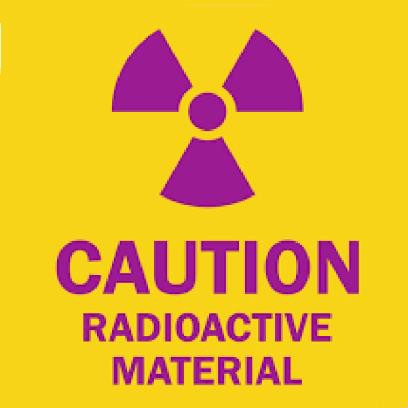

Examples are provided below.
- Pipettes
- Centrifuge
- Incubator
- Fume hood
- Biological safety cabinet
- Sink used to dispose of aqueous non-hazardous liquids
- Radioactive waste containers.
- Benches where radioactive materials are handled.
L. Conduct a work area survey at the end of the day when radioactive materials are used with wipes and/or a survey meter appropriate for the radionuclide used.
M. Personnel working with radioactive materials must –
- Survey their hands, lab coat, shoes, etc. at the end of the experiment.
- Wash hands with soap and water before exiting the lab.
N. Report spills immediately to Research Safety Affairs in accordance with RSP25- Radioactive Materials Spill Response and the Radiation Spill SOP.
- The following safety requirements must be followed by laboratories authorized to use sealed source of radioactive materials –
- Ensure the manufacturer supplied sealed source label is maintained in legible condition.
- Establish written protocols for source utilization that ensure personnel exposures are As Low As Reasonable Achievable (ALARA).
- Use appropriate handling tools and devices to minimize personnel exposure when manipulating sources appropriate for the radionuclide and activity of the source in use.
- Sources must be under the continuous control and oversite of a person authorized by the Radiation Safety Committee to use the source.
- Appropriate shielding as determined by the radiation safety officer and documented in the written protocols must be utilized in use and storage.
- If an incident or accident occurs with the potential to damage the source or if there is any indication of leakage, work must terminate, and Research Safety Affairs must be contacted immediately.
- Notify Research Safety Affairs immediately to report a missing or lost source.
- Review and comply with RSP12 Transport of Radioactive Material on Campus when moving radioactive material outside the laboratory or its storage location.
- Responsibilities of campus parties and departments required to implement identified corrective actions responsibilities –
- Review the final report
- Develop or contribute to the timeline for implementing corrective actions
- Provide routine progress reports to Research Safety Affairs until corrective actions are complete.
- Documentation
- Compliance with these safe work practices will be documented by the Radiation Safety Office during lab inspections in Environmental Safety and Health Assistant.
Penalties/Disciplinary Action for Non-Compliance
License violations are subject to civil penalties up to $5,000 per day per violation. In the event of a threat to public health and safety, the Division has the right to confiscate radiation sources.
References
- Tennessee Administrative Code Title 0400 – Environment and Conservation Subtitle 0400-20 – Division of Radiological Health
- NUREG 1556 Volume 11 Revision 1
- License R-79019-D30
Responsible Official & Additional Contacts
This Responsible Official and Additional Contacts section contains those who are responsible or share certain policy responsibilities, organized by subject matter, such as monitoring compliance with the policy, providing additional guidance on policy clarifications, organizing policy training, updating the policy, etc.
Subject Matter | Office Name | Telephone Number | Email/Web Address |
Policy Clarification and Interpretation | Research Safety Affairs | (901) 448-6114 | |
Policy Training | Research Safety Affairs | (901) 448-6114 |
Related Policies/Guidance Documents
- Tennessee Administrative Code Title 0400 – Environment and Conservation Subtitle 0400-20 – Division of Radiological Health
- NUREG 1556 Volume 11 Revision 1
- License R-79019-D30
 Downloadable PDF